

Medical students and intern doctors have publicly opposed the government’s proposed health sector reforms, signaling growing concern within Uganda’s medical training community.
Speaking on behalf of students, Mpuuga Eddy, the Students’ Chairperson at the Makerere University College of Health Sciences, stated that both medical students and intern doctors do not support the reforms proposed by the Ministry of Health Uganda.
“We as medical students and intern doctors do not support the proposed reforms by the government and the Ministry of Health,” Mpuuga said, emphasizing that the changes could significantly affect the training environment and working conditions for future healthcare professionals.
The statement comes amid growing debate within Uganda’s health sector, with students, medical interns, and practitioners calling for broader consultation before major policy changes are implemented.
Leaders from the student body say they plan to engage stakeholders and advocate for reforms that strengthen medical training, improve working conditions, and safeguard the quality of healthcare delivery in the country.
The development adds a new dimension to the national conversation around healthcare policy and workforce development, as young medical professionals push for a greater voice in decisions shaping the future of Uganda’s health system.
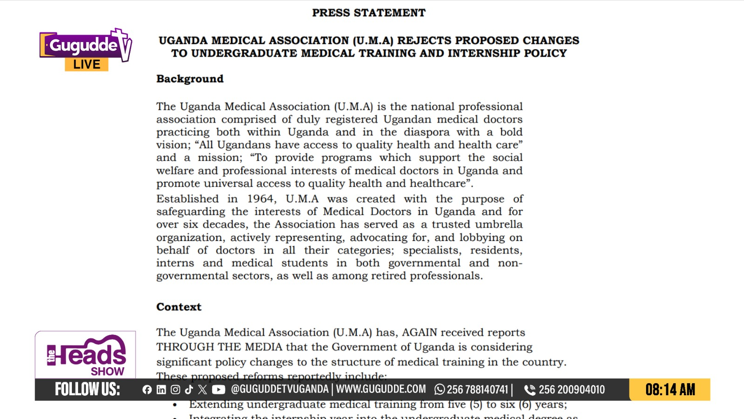
In a press statement, the association said it had learned through media reports that the government was considering major changes to the structure of medical training in the country. The proposals reportedly include extending undergraduate medical training from five to six years, integrating the internship year into the undergraduate degree, requiring students or their sponsors to finance the additional year, and withholding graduation until internship is completed.
UMA said it strongly opposed the proposals in their current form, arguing that they blurred the distinction between academic training and professional licensing.
The association explained that graduation from medical school is an academic certification issued by universities after completion of the Bachelor of Medicine and Bachelor of Surgery (MBChB) program. It noted that internship, on the other hand, is a professional apprenticeship required for licensure by the Uganda Medical and Dental Practitioners Council before a doctor can practice independently.
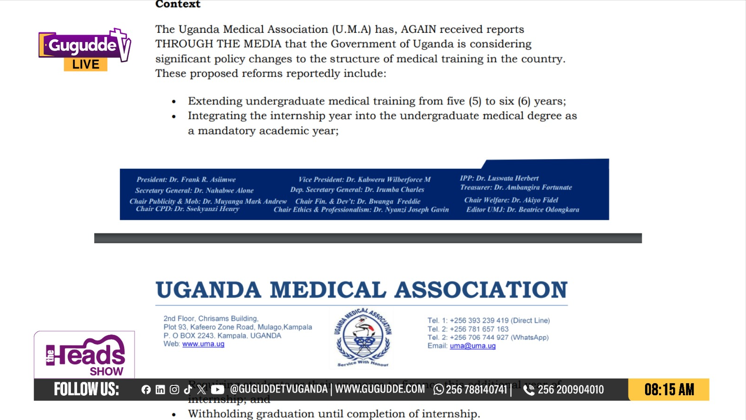
According to UMA, linking university graduation to the completion of internship would merge two processes that are governed by different institutions.
The association also warned that the proposal could lead to indefinite delays for graduates, citing the country’s recurring challenges in deploying medical interns due to budget constraints and administrative bottlenecks. It said some graduates have previously waited several months, and in some cases more than a year, to secure internship placements.
UMA further raised concerns about the financial burden the reforms could place on students and their families. It said medicine is already among the most expensive degree programs in Uganda and that requiring families to finance an additional internship year could increase the cost of training, exclude students from disadvantaged backgrounds, and widen inequality in access to medical education.
The association also cautioned that withholding degrees and academic transcripts from graduates until they complete internship could prevent them from applying for scholarships, pursuing postgraduate studies, or seeking employment opportunities while awaiting placement.

UMA said internship has traditionally been regarded as a national service year supported by government stipends, and warned that converting it into a tuition-funded academic year could shift government responsibilities onto families and potentially exploit student labour.
While acknowledging the need to improve the quality of medical training, the association said extending the duration of training alone would not necessarily produce better doctors. It argued that improving quality requires investments in teaching staff, laboratories, hospital infrastructure, supervision, mentorship, and regular inspections by regulators such as the National Council for Higher Education.
The association called for the immediate suspension of plans to introduce the proposed six-year model linked to internship and urged the government to hold broad consultations with medical students, universities, professional bodies, and regulators.
UMA also asked the government to expand internship capacity, improve supervision, and ensure timely payment of intern allowances rather than shifting costs to families.
The association warned that policies that increase financial barriers or delay professional progression could ultimately weaken Uganda’s healthcare workforce.
It also indicated that it might pursue legal action if the reforms proceed without consultation. UMA leaders said they were seeking an audience with Yoweri Kaguta Museveni to discuss the matter.
Despite its opposition, the association said it remained committed to engaging with the government and other stakeholders to strengthen medical education and healthcare delivery in the country.